
The second week of my freshman year, my professor took our class on a soundwalk, which is the practice of deep listening to the environment during a walk. Each member of our class had come to the Performing Arts Technology department from different disciplines, hoping to learn more about sound for film, music production, and recording techniques; we had not expected our class would include walking without our headphones. We took a long walk around north campus, listening intently to the sounds that surrounded us. From this moment forward, I was hooked on Acoustic Ecology.
If I asked you to describe the sensory experiences of a long walk on a nice spring day, there is so much you could say. The smell of the grass, the sway of the trees in the wind, the sun on your skin, the gravel beneath your feet. But think also of the rustling of the leaves, the birds tweeting, the cars driving by, the people walking past. This is what our professor prompted us with in the first weeks of our class, and we learned that so much of the experience is defined by the sound of the space. This is Acoustic Ecology at work.
In the academic sense, Acoustic Ecology is the study of the relationship between sound, living things, and their environment. The field strives to understand more about our sonic environment and try to improve it, as well as draw inspiration from and raise awareness about its current and ever-changing state. Our sonic environment includes anthropophonic, biophonic, and geophonic sounds. Anthrophony is the sounds made by or mediated through humans, like HVAC noise or a group of people chatting. Biophony is the sound of non-human living things, like a cat’s meow or the rustling of leaves. Geophony refers to non-living environmental sounds, like water rushing or wind whipping. These sounds all work together to create a Soundscape, the landscape of sound around us. Acoustic Ecology is inherently transdisciplinary, by including aspects of traditional acoustics, psychoacoustics, music, biology, ethnomusicology, geography, geology, sociology, and so much more. No matter your field of work or study, Acoustic Ecology can be infused in one way or another.
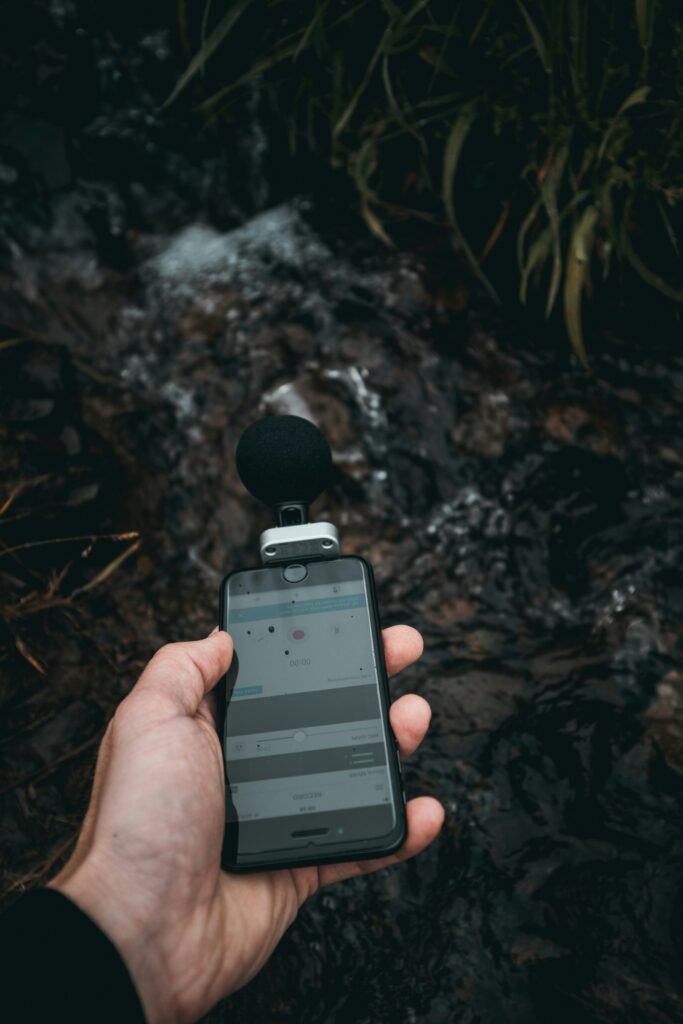
Acoustic Ecology is approached through creative practice and in scientific practice. The scientific practice of Acoustic Ecology is often explored through environmental advocacy, ecological and social research, and data sonification. Data sonification refers to representing hard-to-parse data through mapping it to audio. These practices use the sense of sound as the primary mode of discovery, listening to learn more about our world and who we share it with. My interest in Acoustic Ecology through my work with Student Life Sustainability is much more grounded in the creative side. This is usually realized through Sound Art like compositions or installations. These art pieces often use Field Recordings, which are recordings taken outside of the traditional studio setting, like whale song or the rush of a river.
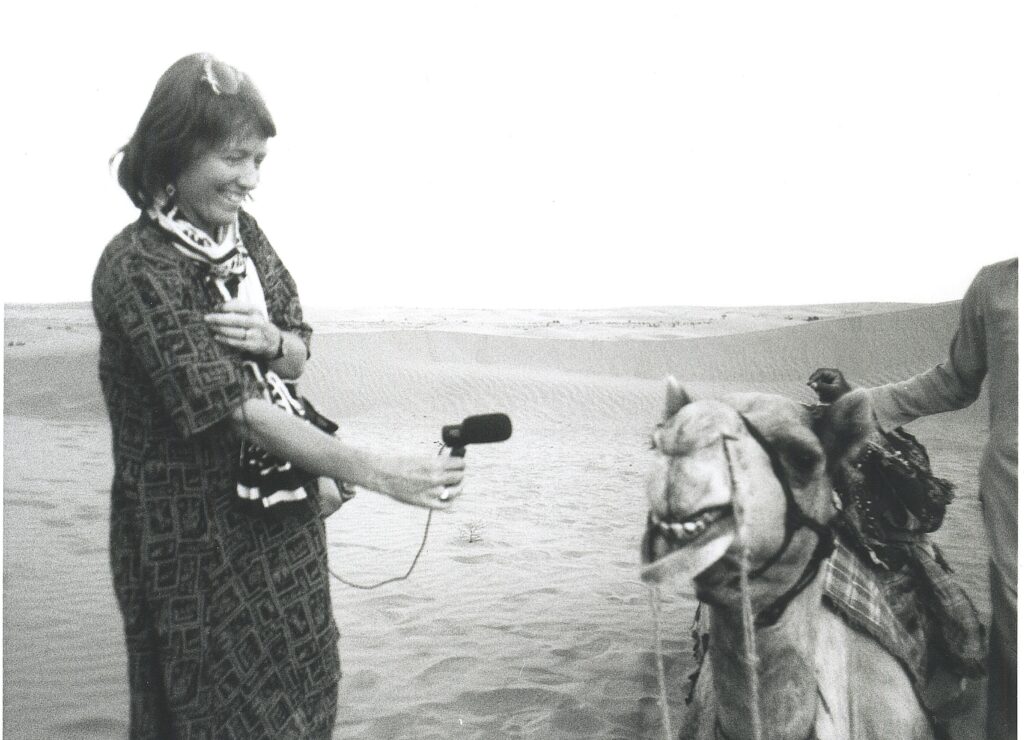
Hildegaard Westerkaamp has contributed greatly to my interest in Acoustic Ecology and its intersection with activism. Westerkaamp worked with a greater sense of her community and the sounds they experience, which has greatly influenced my approach to learning about and educating others on Acoustic Ecology. Westerkaamp popularized the practice of soundwalking, defining it as “A listening exercise that helps us become aware of our immediate acoustic environment. It is also about the aesthetic pleasures of listening. Listening to sounds we might otherwise have missed; listening to the rhythm of sounds; listening for the unique ‘voice’ of a city. It’s about enjoying the sensual beauty and sheer surprise of sound.” Soundwalking takes the heady and academic world of Acoustic Ecology, and places it into our everyday lives.
The soundwalk I took freshman year, and every one since, has opened my ears to the world around me, influencing my artistry as a musician and orienting myself in our Ann Arbor community. In my work with Student Life Sustainability, I led a Soundwalking workshop, which introduced students across the university to the concept and invited them to create their own practice to explore the soundscape of our campus. Participants shared feelings of closer connection to our campus environment and a greater appreciation and understanding of the sounds around them, quiet and loud.
Soundwalking, and Acoustic Ecology as a whole, can so easily be leveraged to advocate for climate activism and social change. Deeper listening to our environments not only helps to foster an almost meditative sense of calm, but helps us to strengthen our understanding of the world around us. By tapping into a sense that is frequently overtaken by sight, we are able to hear the unseen ecological and social processes, and explore nonhuman kinship, connecting us to the world we engage with every day.
So next time you’re out walking, take some time to think about all that you can hear. Listen to the sounds that are close, far, above, and below you. Take the time to engage more with them, listen to them rather than just hearing. Where are they coming from? Is it an enjoyable sound? What sounds are you contributing as you move through the space? What are you learning from what you hear?
Naomi is a Cultural Organizer with Student Life Sustainability, who recently graduated from UofM with a degree in Performing Arts Technology, concentrating in Acoustic Ecology and Sound & Social Justice.