
Deep breaths, I thought as I looked out at the group of attentive people. I was about to give tips on how to talk about climate change with friends, family members, and work colleagues, something that I myself was nervous talking about. I majored in psychology and environment in undergrad, and took climate communication classes that highlighted the importance of climate discussions. Sharing these communication tips with others was a dream come true, and yet I myself was falling into the fear of what it meant to discuss climate change.
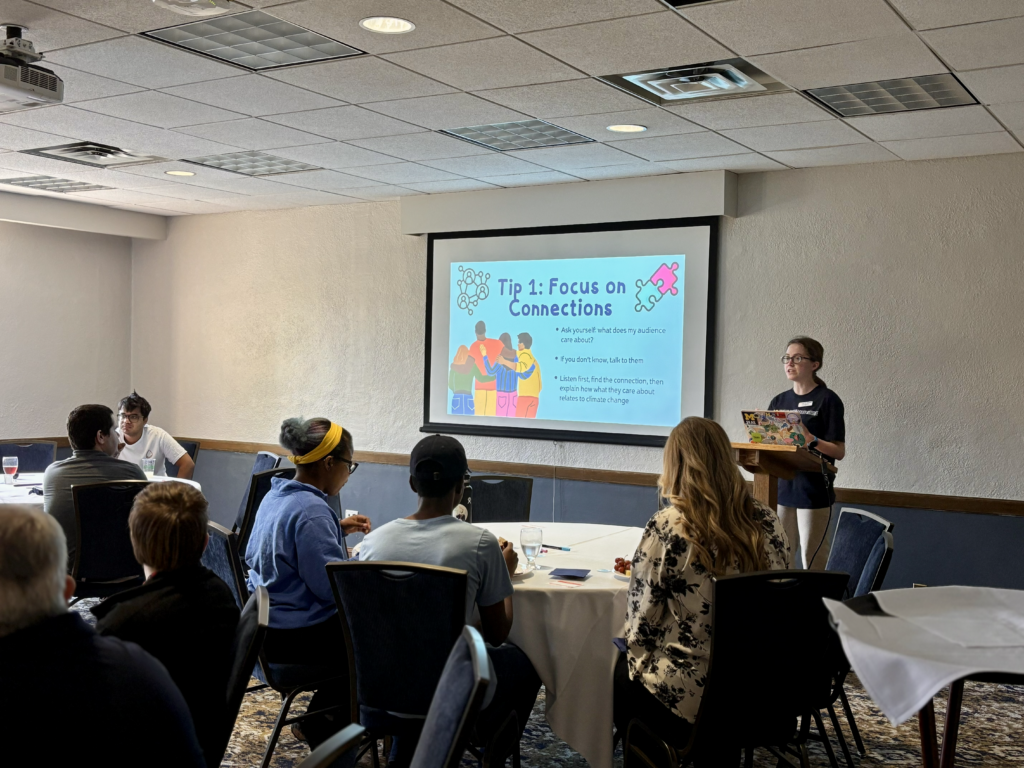
I am no stranger to how the media dramatizes climate change. How it highlights the very few, but very loud negative voices. And I have my own personal fears–I am afraid of being a downer. Of ruining the mood. Of bringing up a subject no one cares about. But now more than ever, as climate change has become more visible than ever before, it’s important to be brave. We need to speak up about climate change. And I tried to remind myself of the reassurances I was about to tell my audience…
Reassurance #1: Pluralistic Ignorance
Pluralistic ignorance is when someone misinterprets what other people think or care about. It is seen a lot with climate change—for example, we tend to underestimate the amount of people that are concerned about climate change (Geiger, 2026a).
This creates a vicious cycle of silence. Think of it like this–I think my friend doesn’t want to hear about climate change, so I don’t talk about it. But my friend actually is concerned about it, but because she doesn’t hear me talk about it, she thinks I don’t care about it. And then we both stay silent, trapped in this false idea that no one cares. All it takes is one person to break that cycle.
Reassurance #2: Expertise NOT required
Oftentimes we may feel barred from talking about climate change because we feel we aren’t experts in the subject. I am not a climate scientist. Even though I am studying environmental communication, there are times when the imposter syndrome sets in, and I worry if I am truly qualified to speak on any of this. But here is one very important thing to know: people do not care if you are an expert. In fact, a lot of people carry skepticism with experts, and experts sometimes struggle to convey their point in a way that is easy for audiences to understand. One study showed that when an expert and a nontraditional student both gave the same message to an audience, it was found that they were equally influential, showing that the expert is not more convincing than anyone else (Geiger, 2026c). Therefore, any experience you have about climate change, or anything you want to talk about, is helpful to push forward more conversations and research into the topic.
Your voice does matter, and people want to hear you use your voice. Here are some tips on how you can do just that:
Tip #1: Connecting Climate Change to Interests
In my Climate Communications class in undergrad, we had two lectures highlighting the importance of connecting to what people care about (Geiger, 2026f; Geiger, 2026g). When preparing to choose someone to talk to about climate change, think about what they might care about. Why is it meaningful to them? Once you find that out, you can bring in climate change—either in how their interests may be affected by climate change or how what they care about actually helps combat climate change.
In her book Saving Us, Dr. Hayhoe brought up a skier she met that joined “Protect our Winters,” an organization that informs people about how climate change is impacting winter sports. That skier connected with other winter athletes to show how climate change may transform the winter and the sport they love, prompting them to take action to protect against this outcome. In this example, Hayhoe shows how someone was able to connect climate change to a specific interest they have and take action on it (Hayhoe, 2021).
Furthermore, you don’t even have to say the exact words “climate change” to still talk about it with others. If the person you want to talk to about it is wary of the topic, believing it to be controversial or frightening–starting with the words climate change may lead them to shut down before they have a chance to listen to you. You can still talk about climate change without using the words directly (Geiger, 2026e). For example, I have spoken with people about how my most recent trip to the Sleeping Bear Dunes in Michigan was met with intense smog from the Canada wildfires. One can usually see very far out across the lake, but the normally clear, beautiful view was obstructed greatly by the smog. Without mentioning the words climate change, I was still able to bring up the concern of the subject through speaking on the highly valued natural sites being changed like never before.


In these ways you can talk about climate change through topics that matter to people, even without using the specific words that have caused people to avoid these conversations in the past.
Tip #2: Values
You can also connect with people through the values they have or ones that you both share. This is similar but slightly different to connecting to people’s cares and interests—because this is more focused on people’s deeper values and the ways they choose to live their lives, as well as how you can connect with the person you are speaking with to build trust and rapport.
Generational Responsibility: Tap into the care people have for how they will impact future generations. You can talk about how climate change will affect our children and grandchildren, who will struggle with increased heat waves, more intense weather events, water and food scarcity, and more if we don’t act now for them (Geiger, 2026d).
Religion: If you are religious and are speaking to someone who is also religious, you can talk about stewardship of the Earth and how climate change helps you care for others (Geiger, 2026d).
Political Ideology: While climate action is usually attributed to liberal ideology, in most countries it is found that the majority of those that identify with more right-wing parties do support climate action, showing that we imagine a partisan gap for climate change when there isn’t really one (Ritchie, 2024). While values may differ between the different ideologies, all of these values can still connect to climate action in some way, as climate change is so broad and affects so much. For conservative voters, you can frame your message to appeal to free market values and morality (like harm and care, patriotism, purity, loyalty). For example, General Ron Keys frames climate change as a threat to national security, and that it’s patriotic to protect your country from the effects of climate change (Keys, 2021). For liberals, you want to appeal to values such as fairness, equality, and social justice (De Witte, 2019). For example, you can talk about how communities of color bear the brunt of climate change more than any other community, and teach others about the environmental justice movement. To appeal to bipartisan voters, you can appeal to values that most people would agree with, such as responsible management of natural resources, childhood experiences, protection of people, and responsibility for nature (Geiger, 2026f).
Tip #3: Give People Solutions
Climate Change is a scary and uncomfortable topic for some, but one that needs to be addressed. However, we don’t want people to shut down in fear, we want them to feel motivated to act. Therefore, we want to provide solutions or help build skills related to climate action. Fear appeals can be motivating as long as you pair it with a solution and skills, and as long as you don’t catastrophize the situation (Geiger, 2026b). For example, you can tell the truth about the situation—the earth is warming at an alarming rate, and becoming a real danger to important ecosystems and human health. But then you can mention things to do to combat this: vote for a pro-climate action candidate, take the bus to work, thrift or repair clothes, etc. Just help people feel capable of handling reality (De Young, 2024).
Building Trust is the Most Important Thing
Both of these tips highlight one major thing: building trust with your audience. This doesn’t mean acting or faking, but truly building rapport with the people you are talking to. Find connections. Listen to them. Show them respect and they will show you respect back. Especially in a subject that seems more controversial than it actually is.
As for my experience in delivering these tips, the event went amazing. Everyone was engaged. Everyone participated. It was so encouraging to see in front of my own eyes the care we all have for our shared world. And when things seem overwhelming, when it seems out of our control, the one thing we can always count on is the ability to talk about it—it’s more powerful than you think.
If climate change communication is something that you are interested in as a student at the University of Michigan, I highly recommend Environment 360: Behavior in the Environment and Psychology 362: Psychology of Environmental Stewardship, both taught by Dr. Raymond De Young. I would also recommend Dr. Nathanial Geiger’s Communicating Climate Change classes. Furthermore, Dr. Katharine Hayhoe is an inspiring Climate Activist with great literature and weekly newsletters to follow. All of these amazing professors and advocates informed my event and knowledge on the subject, and hopefully can help guide you as well!
Kate Meinecke is a Planet Blue Ambassador/Communications Intern at the Graham Sustainability Institute.
Citations
- De Witte, M. (2019). In political messaging, values can be more persuasive than policies, finds new Stanford study. Stanford Report. https://news.stanford.edu/stories/2019/05/political-messages-values-matter-policy
- De Young, R. (2024). Lecture: Envisioning, prospection, and the SEE Framework [PowerPoint slides]. University of Michigan Behavior and the Environment. Retrieved from Lecture Notes.
- Geiger, N. (2026a). Lecture: Public Opinion [PowerPoint slides]. University of Michigan Communicating Climate Change. Retrieved from Lecture Notes.
- Geiger, N. (2026b). Lecture: Emotions Day 1 [PowerPoint slides]. University of Michigan Communicating Climate Change. Retrieved from Lecture Notes.
- Geiger, N. (2026c). Lecture: Source Credibility Day 1 [PowerPoint slides]. University of Michigan Communicating Climate Change. Retrieved from Lecture Notes.
- Geiger, N. (2026d). Lecture: Connecting to What People Care About Day 1 [PowerPoint slides]. University of Michigan Communicating Climate Change. Retrieved from Lecture Notes.
- Geiger, N. (2026e). Lecture: Connecting to What People Care About Day 2 [PowerPoint slides]. University of Michigan Communicating Climate Change. Retrieved from Lecture Notes.
- Geiger, N. (2026f). Lecture: Politics/Values Day 2 [PowerPoint slides]. University of Michigan Communicating Climate Change. Retrieved from Lecture Notes.
- Hayhoe, K. (2021). Saving us: A climate scientist’s case for hope and healing in a divided world. First One Signal Publishers/Atria Paperback.
- Keys, R. (2021). Conservatives can lead on climate change. New Climate Voices. https://www.newclimatevoices.org/
- Ritchie, H. (2024). More people care about climate change than you think. Our World in Data. https://ourworldindata.org/climate-change-support#article-citation